Subscribe

Subscribe to receive new posts:
Available Now!
When Judaism Meets Science

Posts Tagged ‘Torah’
Jews, Judaism and Genetically Modified Crops

Credit: USDA
Genetically modified (“GM”) crops are plant products which have been genetically altered for certain traits. Such traits include resistance to viruses, bacteria, fungi, nematodes, insects, herbicides and drought, as well as aspects of product quality like improved yield, nutritional value and longer shelf life. (See here and here.)
The characterization is somewhat of a misnomer. Modification of biological organisms is not a new process. It has been occurring in nature for billions of years. Indeed, the natural selection of some traits over others is the driving force of biological evolution, the process by which a species over time secures a competitive advantage in its environment. Today, though, the label of GM foods is meant to identify those products that have been modified or engineered by human means.
And yet, the intervention of humans in an otherwise natural process is not new either. Humans have been actively engaged in plant breeding for up to ten thousand years. An Assyrian relief, dated to 870 BCE, illustrates pollination of date palms by man.
Similarly, the Torah tells of Jacob manipulating his flocks of goats and lambs so that he would increase his herd with the fittest among them. (See Gen. 30:31-31:13.)That the author ambiguously attributed Jacob’s success to both magical sticks and God’s miraculous power is irrelevant, for present purposes. What is important is that the story is testament to the reality that at least since the text was written some twenty-five centuries ago, humans have recognized the desirability of and have sought to guide the alteration of existing species in ways thought beneficial. This guided intervention has produced a host of useful and now common food products, but it is, or was, slow, unpredictable, unreliable, costly and inefficient. read more

Is This Really the Torah God Gave Moses at Sinai? (Part II)
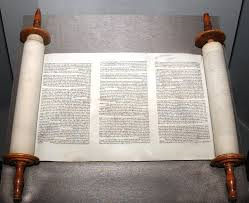
The idea that 3300 years ago, at Sinai, God gave Moses a Torah identical to the Torah we have today is a powerful concept, one that still resonates. But is it probable, even plausible?
Previously, to explore this idea, we have taken the text of the Torah as we have it today and looked at issues of content, language and script. We have already found that the Torah we have not only makes no claim as to its original content, but that internal evidence from the Tanakh strongly suggests that whatever Moses may have written and conveyed at the end of his life was limited in scope. Moreover, external evidence from archeological and other sources indicates that Moses’s sefer haTorah was not written in either the language or the script that a contemporary Torah is. In this post, we look at the transmission of a presumed original Torah, focusing on security for the object and textual variations.
Securing the transmission of the originally inscribed text
Let’s start with the medium of Moses’s inscription of the sefer haTorah that our Torah says Moses wrote just before he died (see Deut. 31:9, 24-26) and the security afforded the resulting work. Our Torah does not say precisely whether Moses chiseled the words into stone, wrote them with a stylus in wet clay or used a quill on parchment or papyrus. If the entire Torah as we know it was inscribed on stone or clay tablets, there must have been many of them to include almost 80,000 words containing over 300,000 letters. If one or more scrolls were used, the material involved must have been sizable as well. In any event, it is certainly hard to imagine the 120 year old Moses chiseling, pressing or writing that much text as he was about to die. read more
Is This Really the Torah God Gave Moses at Sinai?
The Torah is the foundational text of the Jewish People. Initially, it asserts a pre-history and a purpose of the ancient Judahite kingdom to which contemporary Jews trace their emotional and often actual genetic origin, setting forth the kingdom’s legends and lore, its poetry and prose, its customs and commitments.
But the Torah is more than the purported history contained in it. When its contents were reduced to writing, text trumped tradition as the source of both political and religious authority in the Judahite world. (See generally, Schniedewind, How the Bible Became a Book (Cambridge 2004) at 91-117.)The result initiated nothing less than a textual revolution.
Moreover, in the words of Israeli writer Amoz Oz and his daughter historian Fania Oz-Sulzberger, a “lineage of literacy” followed. (See Jews and Words (Yale 2012) at 15.) Transmitted over millennia and eliciting commentary which itself then begot more commentary, the written Torah has bound and continues to bind the Jewish People together over space and across time as they read it, study it, participate in its interpretation and organic growth and act out its lessons. Here, the Torah has served, and continues to serve, as trans-national and trans-generational glue. read more
The Lessons of the Bible Code
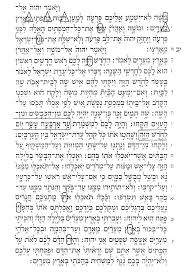
Let’s start at the very beginning. It is, as Oscar Hammerstein once wrote, a very good place to start. Let’s go to the biblical book of Genesis, or, more specifically, to the Hebrew text of it, known as B’reishit, and look at the first four verses. Let’s start with the first word in the first verse, b’reishit. The last letter of b’reishit is the Hebrew letter tav. Now let’s look for the letter which is fifty letters away from that tav. Let’s repeat that process two more times, each time skipping forty-nine letters and seeking the next letter that is fifty letters away from the one we just found. If you count carefully, when you reach the third letter in the second word of the fifth verse in B’reishit, the four Hebrew letters you find in this sequence are tav, vav, resh and hey. Together, in that order, they spell Torah, the first five books of the Tanakh, the Hebrew Bible.
Congratulations! You have just uncovered a hidden Bible code, one formed by an equidistant letter sequence, or ELS. Skeptics can repeat the exercise, and get the same result, as the beginning of the next book in the Hebrew Bible, the book of Exodus, known in Hebrew as Sh’mot. Find the first tav in the first verse of Sh’mot (it’s at the end of the second word) and the next three letters each 50 letters apart. Again, if you are careful, you should find the sequence tav, vav, resh and hey, or Torah.
Too simple? A mere coincidence, you say? Wait, there’s more. read more
A Nice Jewish Shot: Why Vaccinations are Kosher and Required
Let’s face it. Sometimes you can deny certain established scientific truths and it does not make much difference. You can, for instance, believe that the Earth was created about 6,000 years ago and life as we know it will still go on. OK, maybe Jon Stewart and certain professors and pundits will make fun of you, but as the little redhead Annie always reminds us, “the sun’ll come out tomorrow, bet your bottom dollar, that tomorrow there’ll be sun.”
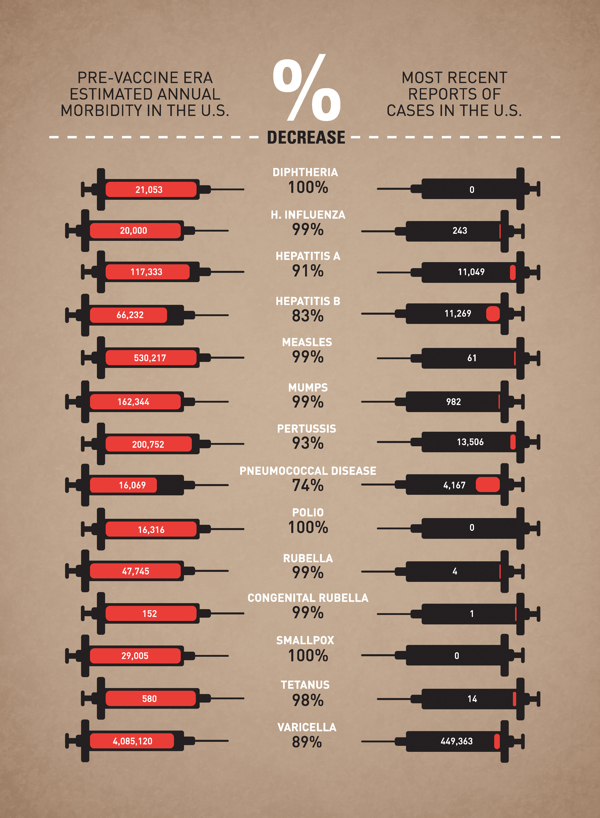
If, however, you deny the safety and efficacy of approved medical vaccinations designed to prevent harmful, debilitating, even deadly diseases, such as polio, measles, hepatitis and tetanus, your belief may well make a great deal of difference to you, your family, your community and, indeed, all of humanity.
And yet, there are those who for a variety of reasons refuse to inoculate themselves or their children, or both, even when established governmental authorities require such action. While it is tempting to stereotype all such persons as undereducated or acting out of ignorance, some are not. Aside from the rare situations based on the medical condition of the child, some people object to a particular vaccine or procedure. Others have broader religious, philosophical and personal beliefs that militate against inoculations. (See, e.g., here and here.) Some even may be part of an otherwise socially conscious community. read more
The Conflict over Whether Judaism and Science Conflict
From time to time, like when an itch just needs to be scratched or a roiling cauldron must overflow, essays are written and debates ensue over the question of whether there is a conflict between Judaism and science. The direct answer to the question depends to a considerable degree on how one defines Judaism, and to a lesser degree on how one defines science. But discussions about the topic, even from Jewish perspectives, often miss that basic point.
Recently Moment Magazine asked nine rabbis the following question: “In what ways, if any, do science and Judaism conflict?” The rabbis were apparently selected as representative of, though not necessarily representatives of, various orientations and denominations. Moment even ordered their responses as if there were a spectrum of Jewish thought from Independent to Humanist, Renewal, Reconstructionist, Reform, Conservative, Modern Orthodox, Orthodox, and, ultimately, Chabad. (Parenthetically, whether this means that Moment believes that Reform is at the center of Jewish opinion is unknown.) The rabbis’ responses are illustrative of the problem inherent in these kinds of discussions. read more
Extraterrestrial Life-Forms: A Religious View
When the inquisition condemned Galileo for writing that the earth might not be the center of the solar system, the Roman Catholic Church was supporting the philosophy and science of the Greco-Roman world because it seemed to support the religious idea that the earth, life in general and human life in particular, should be the center of God’s world.
Today very few religious people think that if the earth revolves around the sun, it makes humans less important to God. The value, meaning and importance of a human life, is not a scientific issue; it is a religious issue.
So too, when by the end of this decade, astronomical evidence of stars with earth-like planets, at the right distance from their star to have liquid water, and an atmosphere with oxygen, is found, there will be no need to deny the evidence and condemn the scientists as anti-religious. Religious people need to know that the Torah and the Qur’an clearly teach that the Living God created the whole universe to be conducive to the universal evolution of life. read more
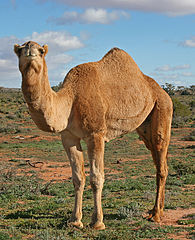
The Camel’s Nose and the Torah’s Tent
The time is out of joint – O cursed spite,
That ever I was born to set it right!
Nay, come, let’s go together.
Shakespeare, Hamlet, I, 5
For those who hold that the Bible, and particularly the Torah, is the Word of God, without flaw and inerrant, the last few hundred years have been very frustrating. The development of the Documentary Hypothesis, the idea that the Torah was a compilation of works from several discrete sources, was and, despite scholarly challenge, remains a formidable obstacle to the claim of unitary and divine authorship. But the Documentary Hypothesis is, for all its power and value, just that, a hypothesis. Similarly, the notion that much of the Torah text is pretext, i.e., a series of allegories designed to enhance the image of one or more Kings of Judah, is another provocative and persuasive concept, but again, just that, a concept.
Yet while some would dismiss such broad theories as too sweeping, and not definitive, small, stubborn little problems with the text cannot be so easily refuted and disregarded. One sign that the Torah is not the work of a single writer, much less a divine one, is the presence of anachronisms in the text. read more
The Curious Consensus of Jews on Abortion
That different Jews have disparate views is not news. What is news is when most Jews agree on a particular idea or approach. And so it is with the curious consensus of Jews on abortion.
In mid-2012, the Public Religion Research Institute (“PRRI”) published its findings from a 2012 survey of Jewish values (the “Jewish Values Survey”). The survey sought to measure the opinions of American Jews on a wide variety of political and economic issues, both domestic and foreign, as well as with respect to certain religious beliefs and practices. Some of those opinions were analyzed internally by Jewish denomination and externally by comparison to those of other faith or ethnic groups.
While Jews varied considerably in their views of a wide range of topics, on one – abortion – they were not only reasonably cohesive in their attitude, but strikingly different from other groups. Given the emphasis in the Jewish tradition on valuing life, on equating the preservation of one life with the preservation of a world and, conversely, the destruction of one life as the destruction of the world (Mishnah Sanhedrin 4:5), this result, on its face, seems as anomalous as it is clear. read more
The Cosmos, Oneness and Judaism: Are Pantheism and Panentheism Kosher for Jews?

The psalmist and the skeptic and the prophet and the professor look at the universe in which we find ourselves, see the same stars, feel the warmth of the same sun, hear thunder pealing from the same sky, understand the processes by which nature unfolds in spring, retreats in fall only to regenerate again the following year, and yet often draw different conclusions from the same observable data. So, for instance, in response to the emergence of humankind, a non-theist might merely record the evolutionary data or might, like cell biologist Ursula Goodenough, marvel at the improbability, the mystery, and the grandeur of our existence. (See, e.g., The Sacred Depths of Nature (Oxford University Press 2000).) The traditional Jewish believer, by contrast, might offer a prayer to the Supreme Being: Blessed are You, sovereign of the universe, who has fashioned us from the dust of the Earth in Your image and breathed our soul into us.
Is there another way, a way to attempt to understand one’s place in the cosmos that is consistent with current scientific knowledge, and yet recognizes the miracle of our presence without dependence on some supernatural being? Is there an approach to the cosmos which might be attractive to many, perhaps most, American Jews who do not believe in the traditional personal God who dominates the Torah, but nevertheless accept the existence of (and may even yearn for) some extraordinary power, force or spirit which pervades all that is? (See Post March 14, 2012) And, if so, is that path kosher? read more