Subscribe

Subscribe to receive new posts:
Available Now!
When Judaism Meets Science


Archive for January, 2012
New Planets, A God For The Cosmos and Exotheology
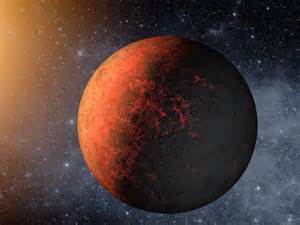
We are blessed to live in an age of great discoveries. Prior to about fifteen years ago, astronomers had not been able to identify planets in orbit around stars beyond our solar system. These planets, known as extra solar planets or exoplanets, have now been found. In fact, in the first dozen years from the discovery of the first exoplanet, about 500 such planets were located in diverse areas of the known universe.
Then NASA initiated the Kepler space mission, which was designed to find Earth sized planets within the habitable zone of a star. The mission focused on a relatively small star field in the constellations Cygnus and Lyra, perhaps the extent of the sky obscured by an average extended fist. The discoveries have been phenomenal, and the pace seems to be accelerating. As science writer Timothy Ferris has said, “We live in a changing universe, and few things are changing faster than our conception of it.” (Ferris, The Whole Shebang (Simon & Schuster 1997), at 11.) read more

Science and Judaism: Biblical Numbers, Mathematics and Attributed Patriarchal Ages
Credit: Roger Price
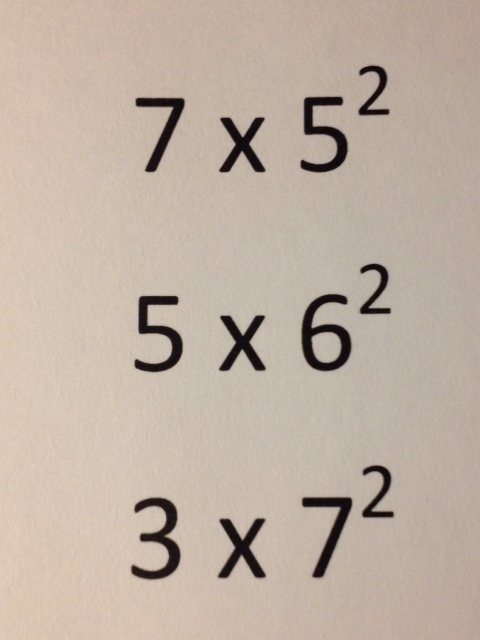
The Hebrew Bible is filled with numbers. There are different kinds of numbers — cardinals and ordinals, integers and fractions, even primes. And they are everywhere in the Torah text.
There are numbers for days. (See, e.g., Gen. 1:5, 8, 13.)
There are numbers for life spans. (See, e.g., Gen. 5:5, 8, 11.)
There are numbers for populations, i.e., census numbers. (See, e.g., Ex. 1:5, 12:37; Num. 1:46, 2:32.)
There are numbers for the measurement of quantities. (See, e.g., Ex. 16:22, 36, 29:40.)
And for sizes. (See, e.g., Gen. 6:15.)
There are numbers for the duration of events. (See, e.g., Ex. 12:40, 24:18.)
There are numbers for a host of seemingly mundane things, such as the number of visitors and the number of palm trees. (See, e.g., Gen. 18:2; Ex. 15:27.) read more